Japandi Style on a Budget: A Practical Guide for Real Apartments
Japandi blends Japanese and Scandinavian design. Here's the palette, materials and furniture to get the look in a rental, plus where to save and spend.
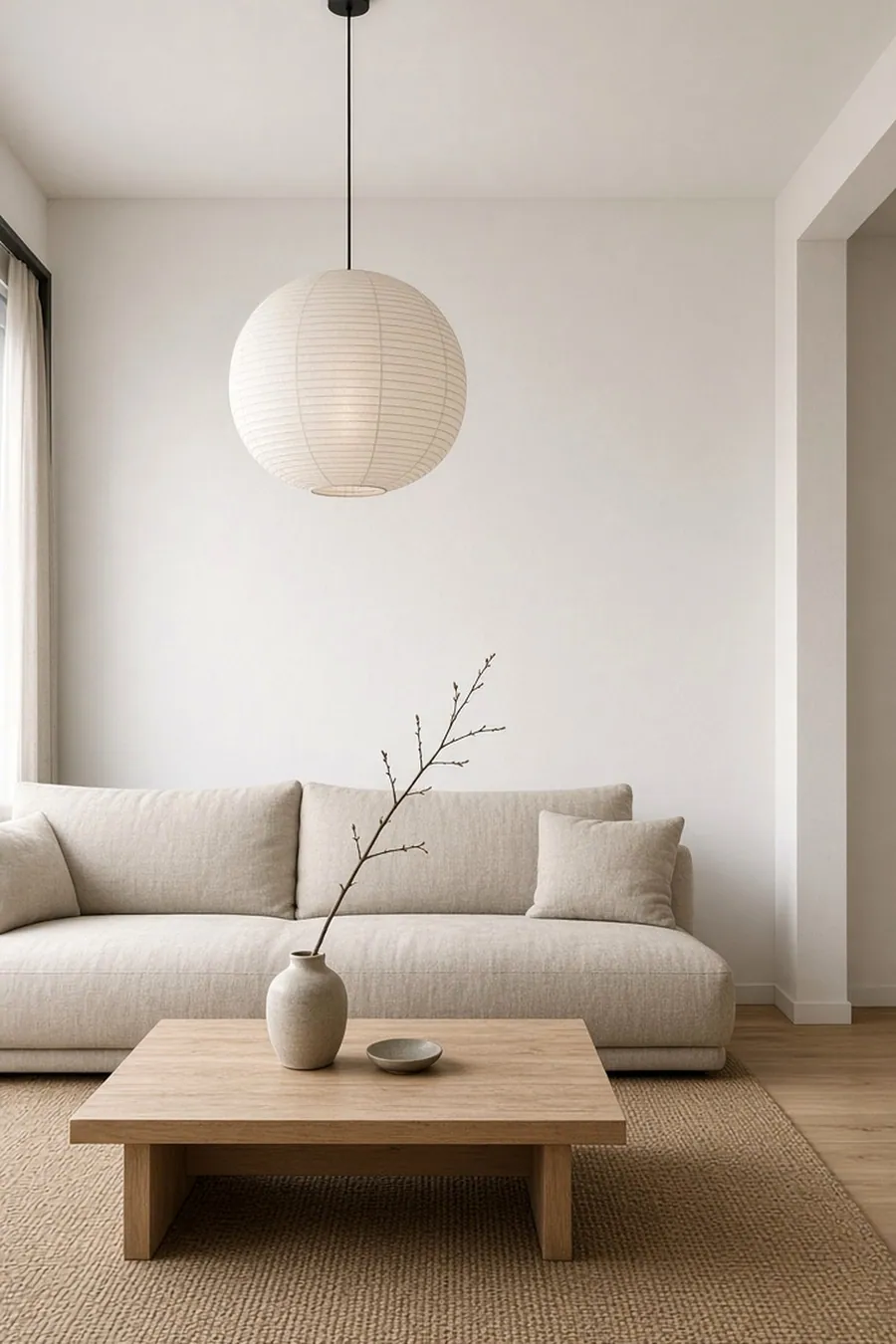
Japandi is what you get when Japanese and Scandinavian design meet halfway. Both traditions love natural materials, clean lines and rooms with room to breathe. Japanese design brings a quieter, darker, more crafted feel; Scandinavian design brings lightness and comfort. Put them together and you get calm rooms that still feel lived in.
It’s also one of the friendlier styles for renters and small spaces, because it’s mostly about editing. You can get much of the look with what you already own, a few good materials and some discipline.
The core idea: fewer things, better surfaces
The Japanese concept people mention most with Japandi is wabi-sabi, an appreciation for things that are imperfect, handmade or worn by time. The Scandinavian side contributes hygge-style comfort and practicality. In decorating terms that means:
- Fewer objects, each one chosen on purpose.
- Natural materials with visible texture: wood grain, linen slub, handmade glaze.
- Low, simple furniture with clean lines and no ornament.
- Empty space treated as part of the design, not something to fill.
If a room feels busy, Japandi says take something out rather than rearrange it.
The Japandi color palette
Start with a warm base. Cool, bright white walls look harsh in this style. Look instead for warm off-whites, greige and pale clay tones. If you can paint, a soft warm white in a matte or eggshell finish is ideal. If you can’t, your walls are probably already some kind of white, and that’s fine; the textiles and wood will warm things up.
Layer on:
- Wood tones: light oak, ash or beech for the Scandinavian side; darker walnut or smoked oak for the Japanese side. Mixing one light and one dark wood in a room works well. Mixing five doesn’t.
- Neutrals: sand, oatmeal, stone, taupe.
- Depth: charcoal or soft black in small doses, like a lamp base, picture frames or a cabinet.
- Muted color, if any: sage, olive, rust or clay. Keep it dusty and low-saturation.
Our guide to choosing paint colors explains how to spot undertones, which matters a lot with these subtle shades.
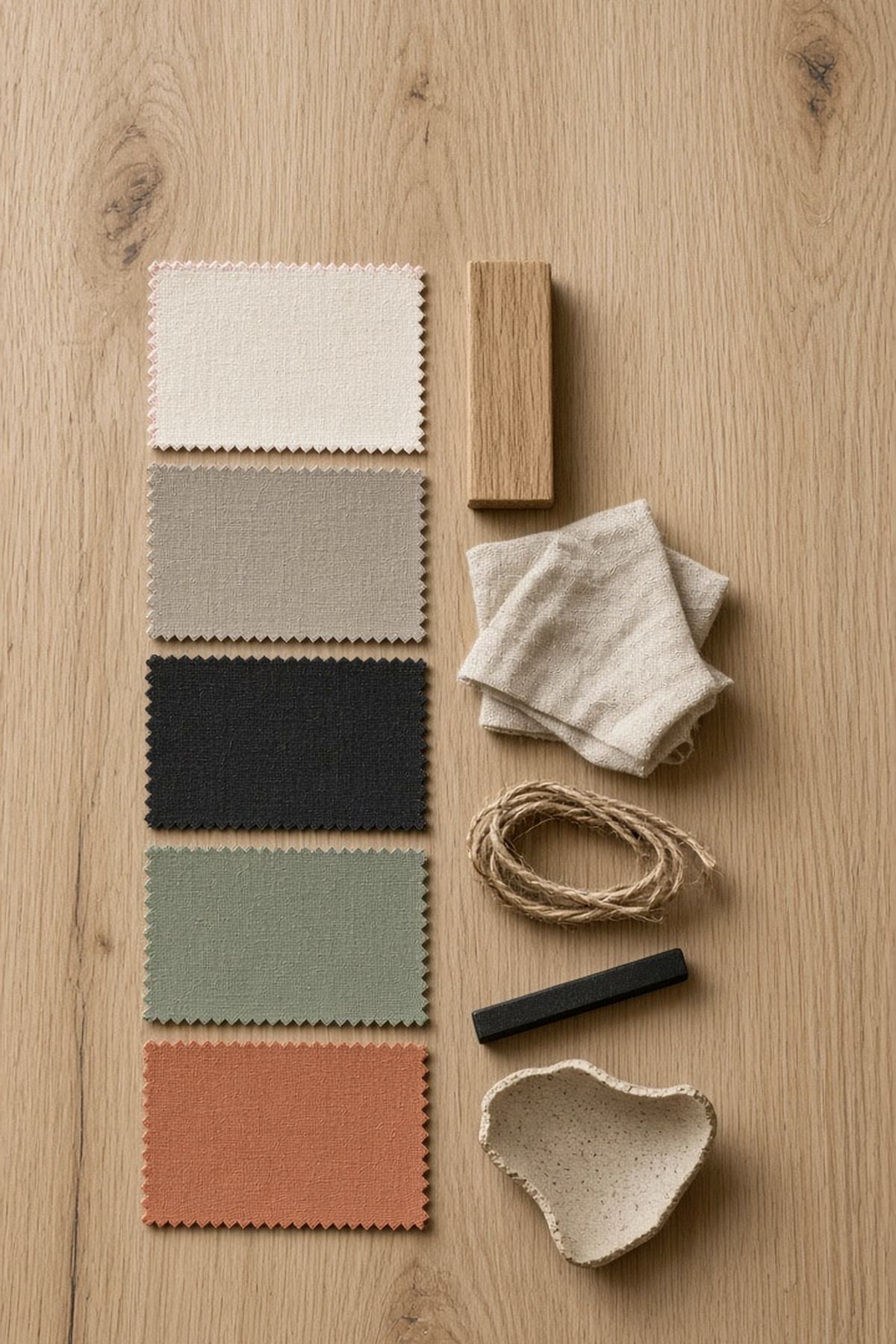
Materials that do the heavy lifting
Japandi lives or dies on texture, because the color palette is so restrained. Prioritize:
- Linen and cotton for curtains, slipcovers and bedding. Washed linen looks better slightly wrinkled, which is a relief.
- Wool, jute and flatweave rugs in natural tones.
- Paper for lighting. A paper lantern pendant is the most affordable Japandi move there is. Basic paper shades cost under $20 at big-box stores; designer versions, like Isamu Noguchi’s Akari lamps, cost much more.
- Stoneware and handmade ceramics for vases, bowls and mugs. Matte glazes over glossy.
- Rattan, cane and bamboo in small amounts.
- Black metal for thin accents: a curtain rod, a lamp arm, cabinet pulls.
Things to avoid: shiny chrome, high-gloss lacquer, mirrored furniture, and anything plastic that’s trying to look like wood.
Furniture: low, simple, solid-looking
Japandi furniture sits lower than standard and has simple, chunky-but-clean forms. Think a sofa with a low back and wood legs, a platform bed, a coffee table with thick legs and no glass top.
You don’t need to replace everything. A few practical ways to shift what you have:
- Remove or swap legs. Many sofas take screw-in legs. Shorter wood legs (around 4 inches instead of 6 or 7) bring the whole piece down. Replacement legs cost about $25 to $60 for a set.
- Slipcover the sofa in a linen or linen-blend fabric in oatmeal or stone.
- Choose a bench instead of a second coffee table or a TV console with lots of compartments.
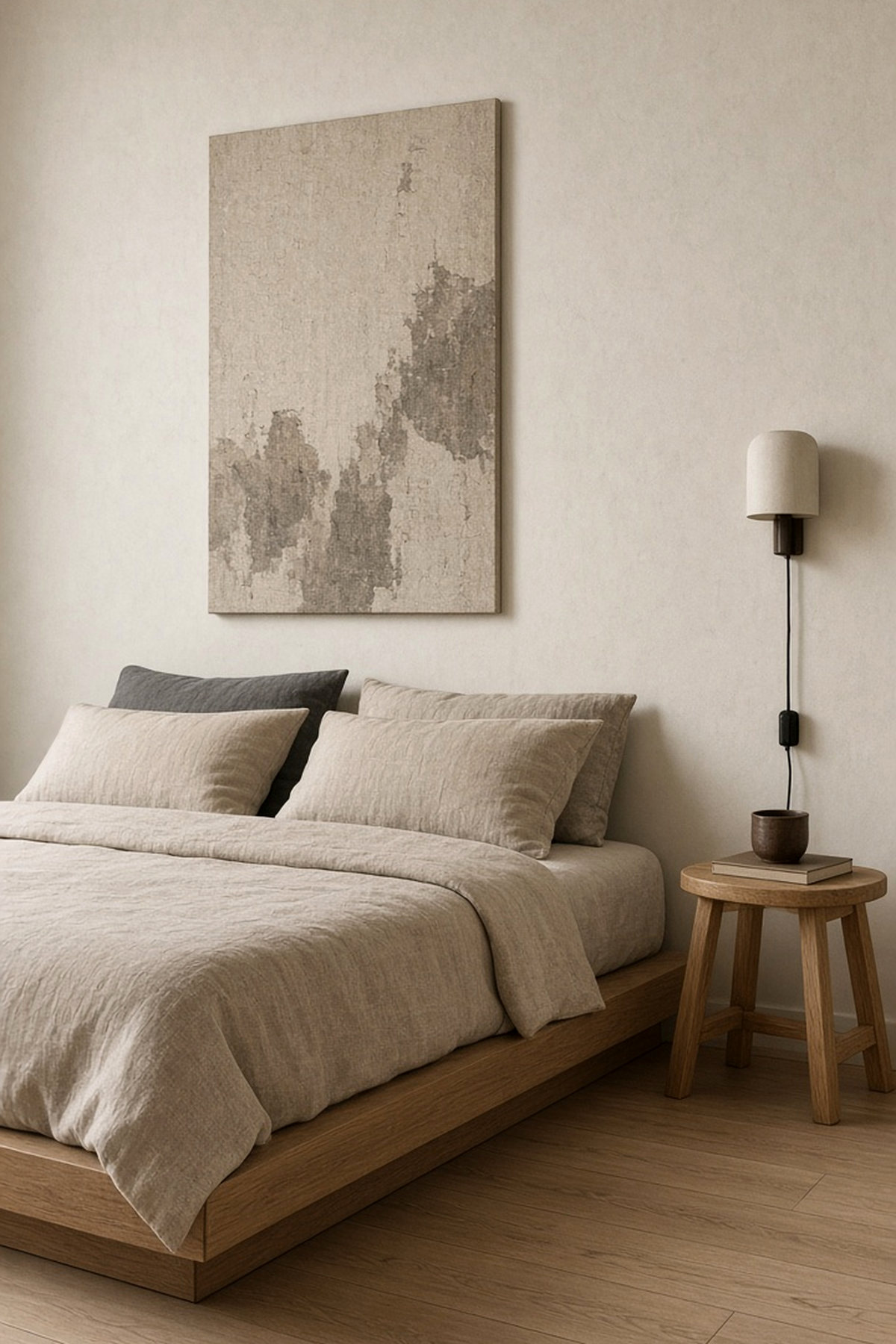
- Use a stool as a nightstand in the bedroom. It’s lower, simpler and cheaper.
Low furniture also makes ceilings look higher, which helps in apartments with standard 8-foot ceilings.
Lighting: warm, soft, from below eye level
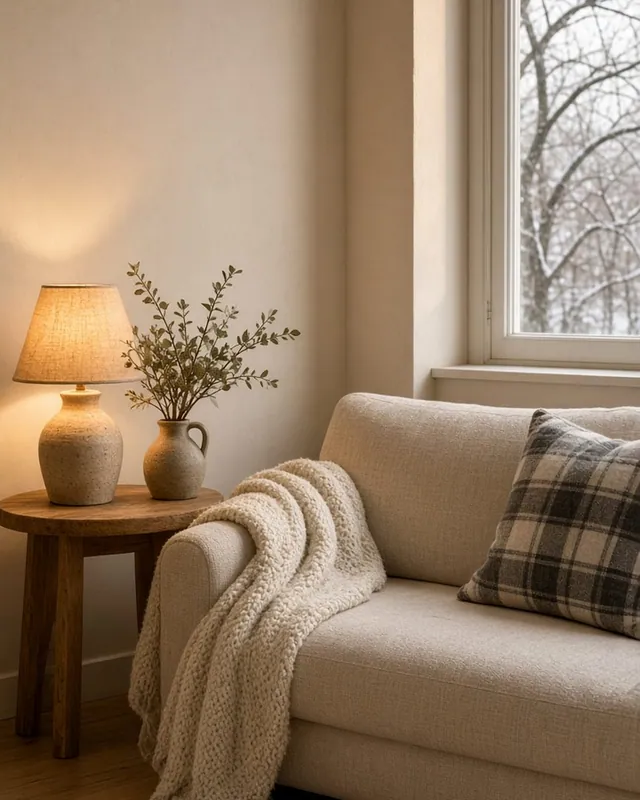
Japandi lighting is about glow, not brightness. Use warm bulbs (2700K, or 2200K to 2400K for a paper lantern), and get most of your light from lamps rather than the ceiling. A paper floor lamp in a corner, a ceramic table lamp beside the sofa, and a plug-in wall sconce by the bed covers most rooms. Our lighting guide goes through bulb choices and lumens if you’re starting from scratch.
A Japandi living room, step by step
- Clear the surfaces. Take everything off the coffee table, shelves and console. Put back only what you love or use daily.
- Anchor with a rug in jute, wool or a flatweave in a natural tone.
- Soften the sofa with a linen slipcover or a couple of pillow covers in sand, charcoal or rust. Two or three pillows, not seven.
- Add one large plant or branch rather than several small ones. A fiddle leaf fig, olive tree or a single cut branch in a tall vase.
- Hang one piece of art, large and quiet: ink, abstract linework, a textured canvas. Japandi walls are mostly empty.
- Hide the clutter in closed storage. Baskets and lidded boxes help here. Our older post on wicker storage baskets has some options.
A Japandi bedroom
The bedroom is the easiest place to start because there’s less in it. A low bed frame, or even a mattress on a slatted platform. Bedding in natural linen, layered in two tones such as sand and charcoal. One nightstand or stool per side with a lamp and nothing else. Closed storage for clothes. Warm, dim light.
Japandi vs. warm minimalism
The two overlap heavily. Warm minimalism is the broader idea: minimal rooms that avoid the cold, white-box feel by using wood, texture and warm neutrals. Japandi is a specific version of that, with a stronger nod to Japanese craft, lower furniture and more contrast from dark woods and black accents. If you want something softer and more flexible, call it warm minimalism and don’t worry about the rules.
Where to spend and where to save
Spend on: the pieces you touch every day. A sofa or slipcover in good fabric, bedding, and one solid wood piece like a coffee table or dining table. Real wood ages well; laminate tends to chip and look cheap up close.
Save on: paper lighting, ceramics (thrift stores are full of good stoneware), plants, linen-look curtains and frames. IKEA is genuinely useful for this style, and our IKEA hacks post shows a few ways to make basic pieces look more custom.
Common Japandi mistakes
- Going too beige. Without a dark accent and some texture, the room just looks unfinished.
- Buying “Japandi” decor sets. A room full of matching decorative objects is the opposite of the idea.
- Too many plants. One or two well-placed ones beat a jungle.
- Forgetting comfort. It should still be a place you want to sit for an evening. If it feels like a gallery, add a throw and a softer rug.
Start by taking things away. If the room already feels better after that, you’re most of the way there.