Which Pillows Go With Which Sofa? A Designer's Answers to the Questions I Hear Most
How many pillows, what size, which fabrics, and how to match them to a track-arm, rolled-arm, sectional, leather or boucle sofa. The pillow questions people ask me most, answered.
If there’s one question I could answer in my sleep, it’s this one: which pillows go with my sofa? People ask me while they’re standing next to a sofa they love, phone out, scrolling through a hundred pillow covers and wondering why none of them look right. The good news is that pillows follow a few simple rules, and once you know them, the hundred options shrink to about five.
Here are the questions I hear most, and the answers I give.
How many pillows should go on a sofa?
For a standard three-seat sofa, I start with four or five. Two at each end and, if you like, one lumbar in the middle. Fewer than three and the sofa can look bare; more than six and nobody has anywhere to sit.
A simple way to decide:
- Loveseat (up to about 72 inches): two or three pillows.
- Three-seat sofa (about 80 to 90 inches): four or five.
- Sectional: five to seven, grouped at the ends and in the corner, never in a single line.
Odd or even doesn’t matter as much as people think. Symmetry (two and two) feels calm and traditional. An odd number (two on one side, one on the other) feels relaxed and a little more modern.
What size throw pillows should I buy?
This is where most sofas go wrong. Pillows are usually too small for the sofa.
| Sofa back height | Main pillows | Second layer | Accent |
|---|---|---|---|
| Low back (under about 30 in.) | 20 in. | 18 in. | 12x20 lumbar |
| Standard back | 22 in. | 20 in. | 14x22 lumbar |
| Deep or high back, sectionals | 24 in. | 22 in. | 14x26 lumbar |
A good rule of thumb: the largest pillow should come up to roughly the top of the sofa back cushion, not stop halfway down it. And buy inserts two inches bigger than the cover (a 22-inch insert in a 20-inch cover) so the pillow looks full instead of flat. Feather or feather-blend inserts give you that soft “chop” at the top; polyester bounces back flat.
How do I mix patterns without it looking busy?
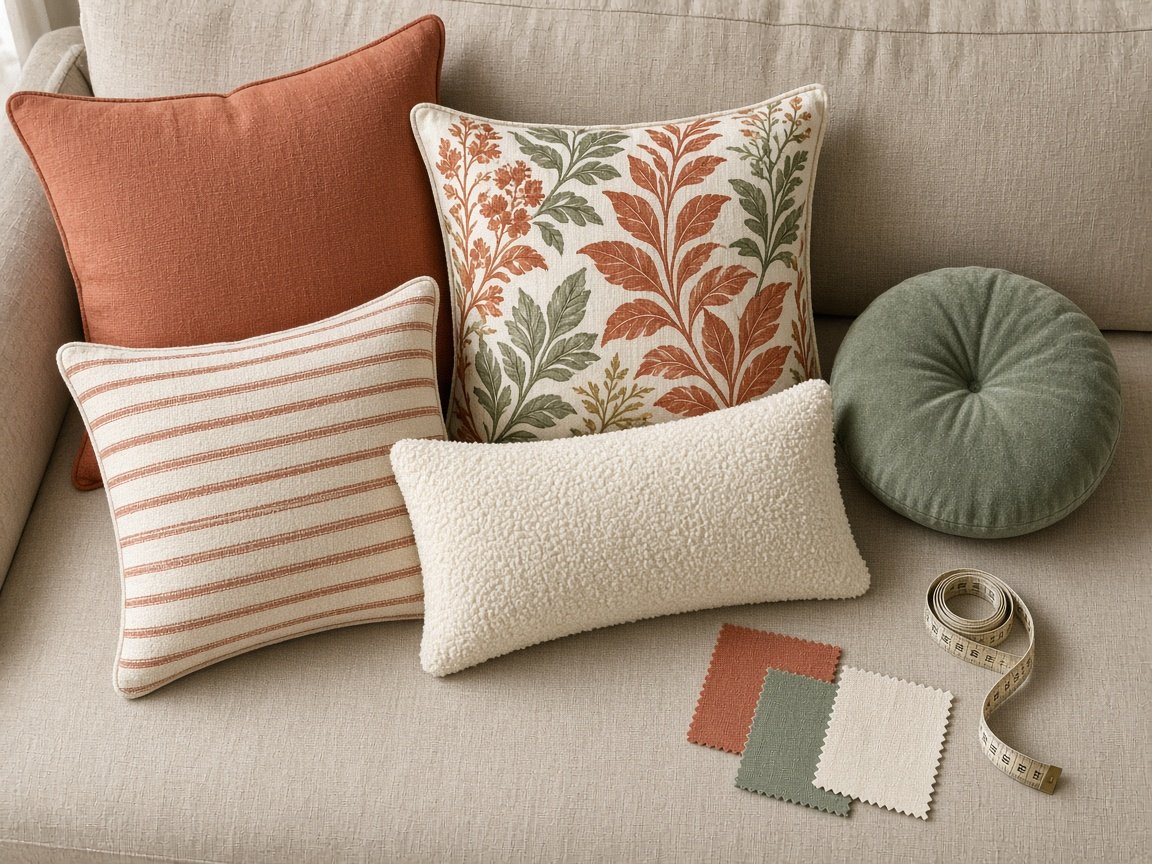
I use a three-part formula almost every time:
- A solid in a color pulled from the room (a rug, a painting, a curtain).
- A small-scale pattern: a thin stripe, a tiny check, a ticking.
- A medium or large pattern: a botanical, a paisley, a geometric.
Then I add one texture-only piece, like a boucle lumbar or a velvet round, to break it up. All the pieces share at least one color so they read as a family.
If you’re nervous about pattern, keep it to the formula’s first two parts (solid plus stripe) and let texture do the rest. It’s very hard to get wrong.
Which pillows go with which sofa style?
The shape and fabric of the sofa should guide the pillows. Here’s how I think about the five styles I’m asked about most.
Track-arm sofas: crisp shapes, a little color
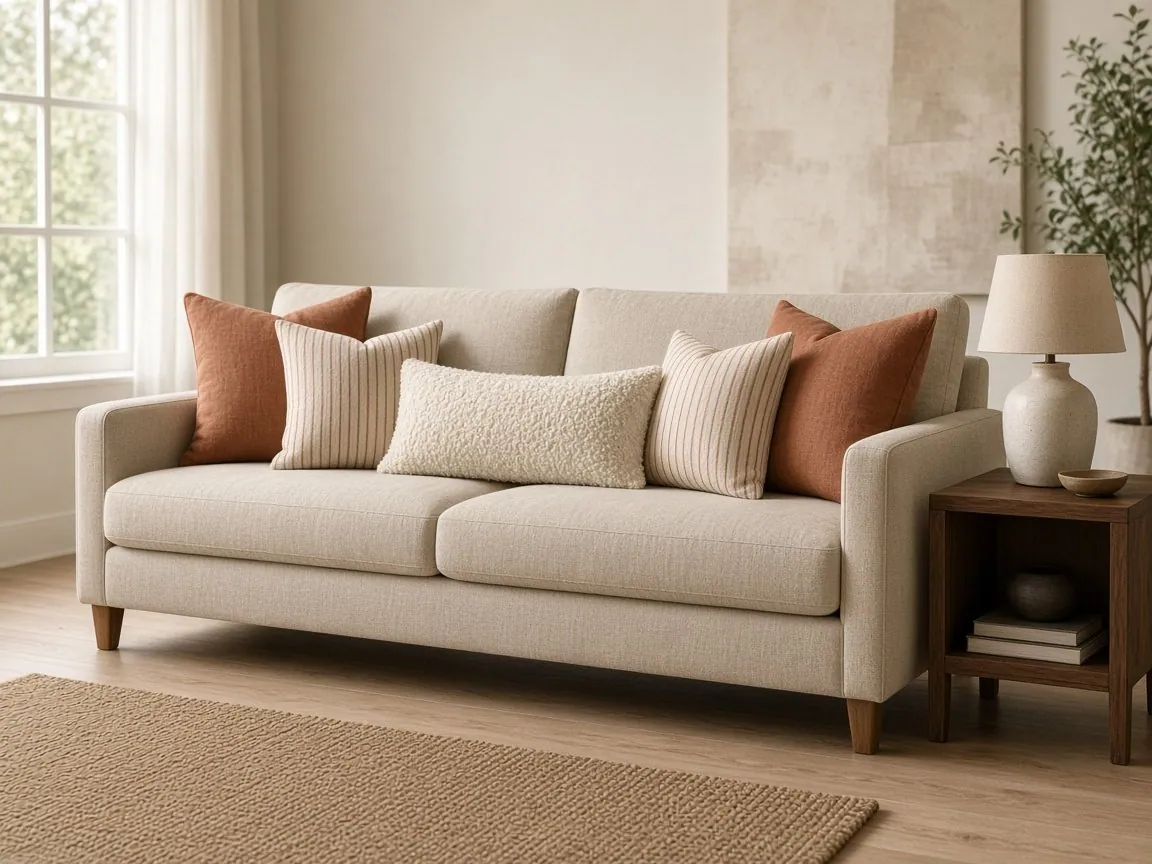
A track arm is the clean, squared-off arm you see on most modern sofas. Because the silhouette is so tailored, I like pillows with knife edges or a thin welt and a clear color story. In the photo at the top of this post, an oatmeal linen sofa gets two solid terracotta pillows, two small-scale stripes and one ivory boucle lumbar. That’s the formula in action, and it works on almost any neutral track-arm sofa.
Skip: heavy fringe and big ruffles. They fight the straight lines.
Rolled-arm sofas: pattern and softness
A rolled arm is traditional, so it can carry more pattern and softer shapes. Florals, faded prints, flanged edges and the occasional round or bolster pillow all feel at home here.
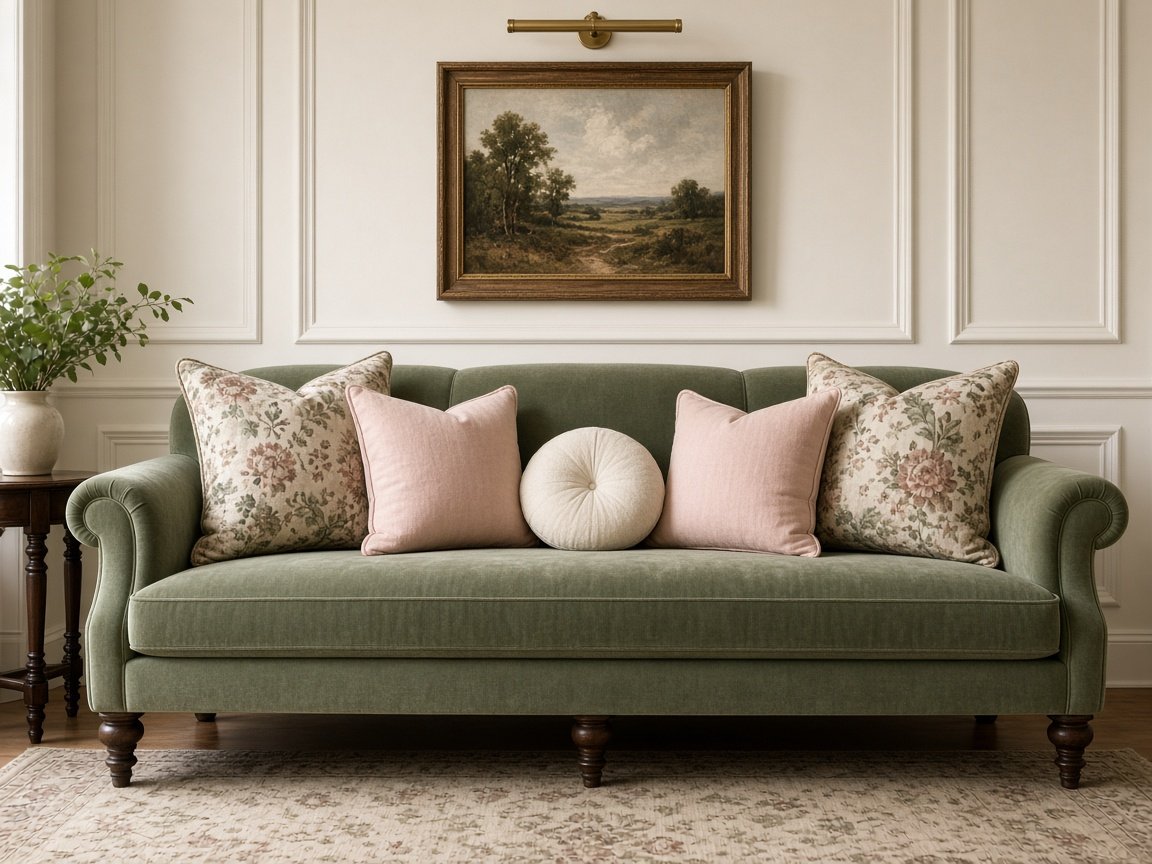
A velvet sofa likes a flatter-weave pillow next to it, like linen or cotton. Velvet on velvet can look heavy.
Sectionals: group them, don’t line them up
The most common sectional mistake is spacing pillows evenly along the whole length, like a row of soldiers. Instead, cluster them: a group of two or three in the corner and a pair at each end. Use your largest sizes (24 inches) in the corner, where the seat is deepest.
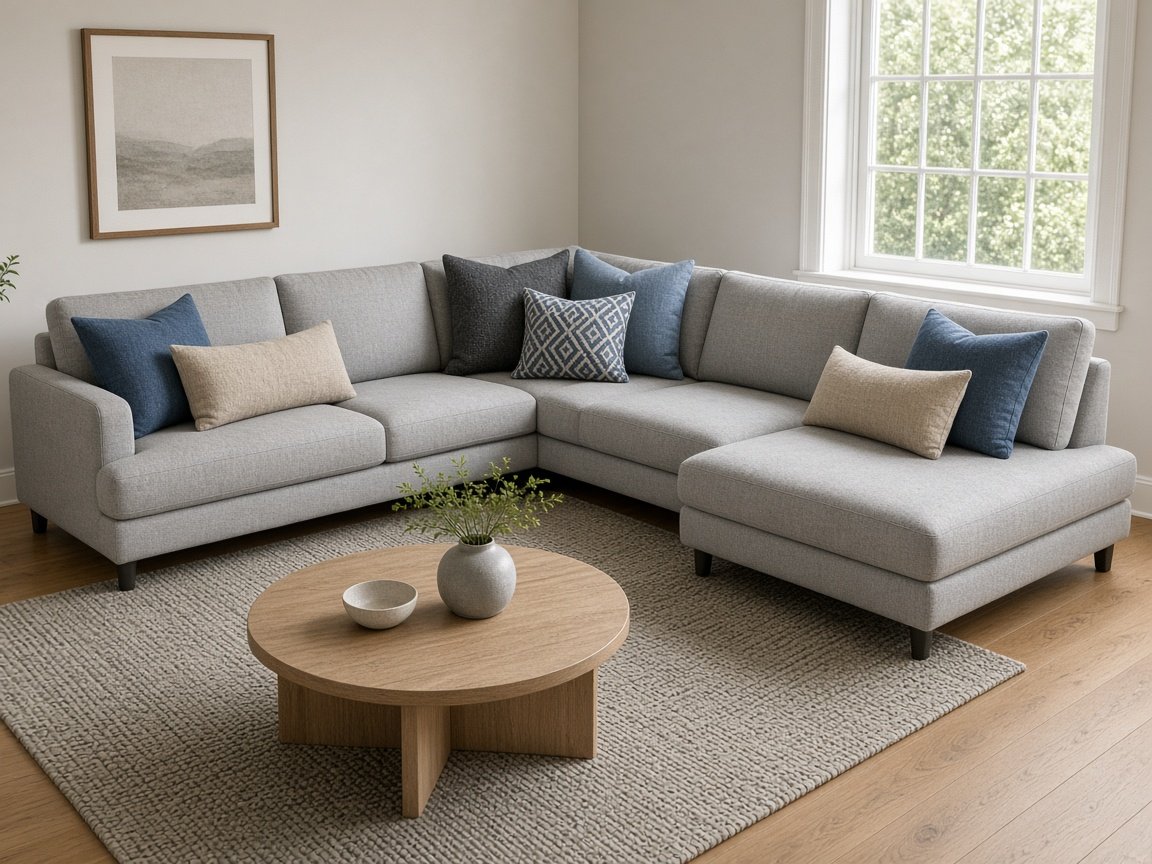
On a gray sectional, I like one color family (here, blues from denim to charcoal) plus a natural linen to warm it up.
Leather sofas: add texture, not shine
Leather is smooth, cool to the touch and can feel a bit slippery, so pillows should bring texture and warmth. Chunky knits, wool, mohair, woven kilim-style patterns and nubby linens all look great against cognac or brown leather.
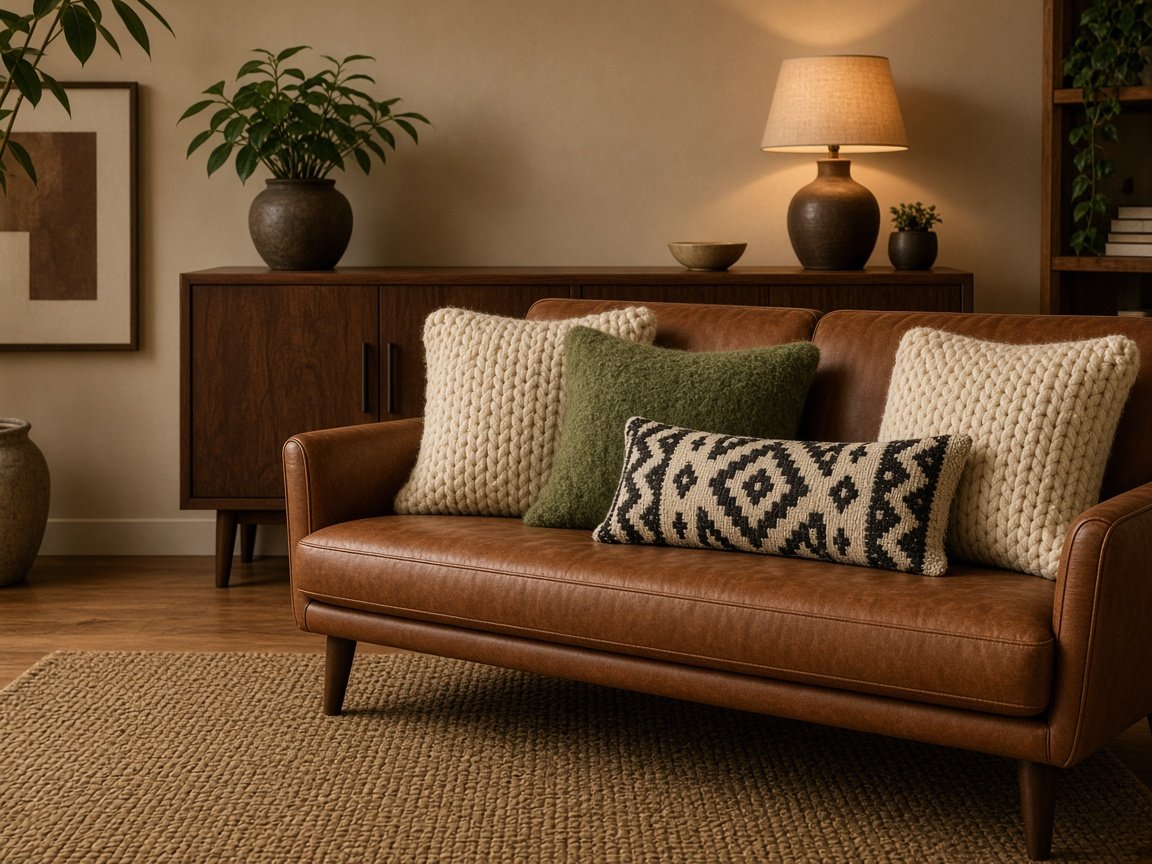
Skip: silk, satin and faux leather pillows on a leather sofa. They slide off and the room gets too shiny.
Boucle sofas: go smooth
Boucle is the nubby, looped fabric that’s everywhere right now. Because the sofa already has so much texture, I flip the rule: choose smooth pillows. Leather or faux leather, washed linen, cotton velvet. A curved boucle sofa also looks lovely with fewer pillows, three is often enough.
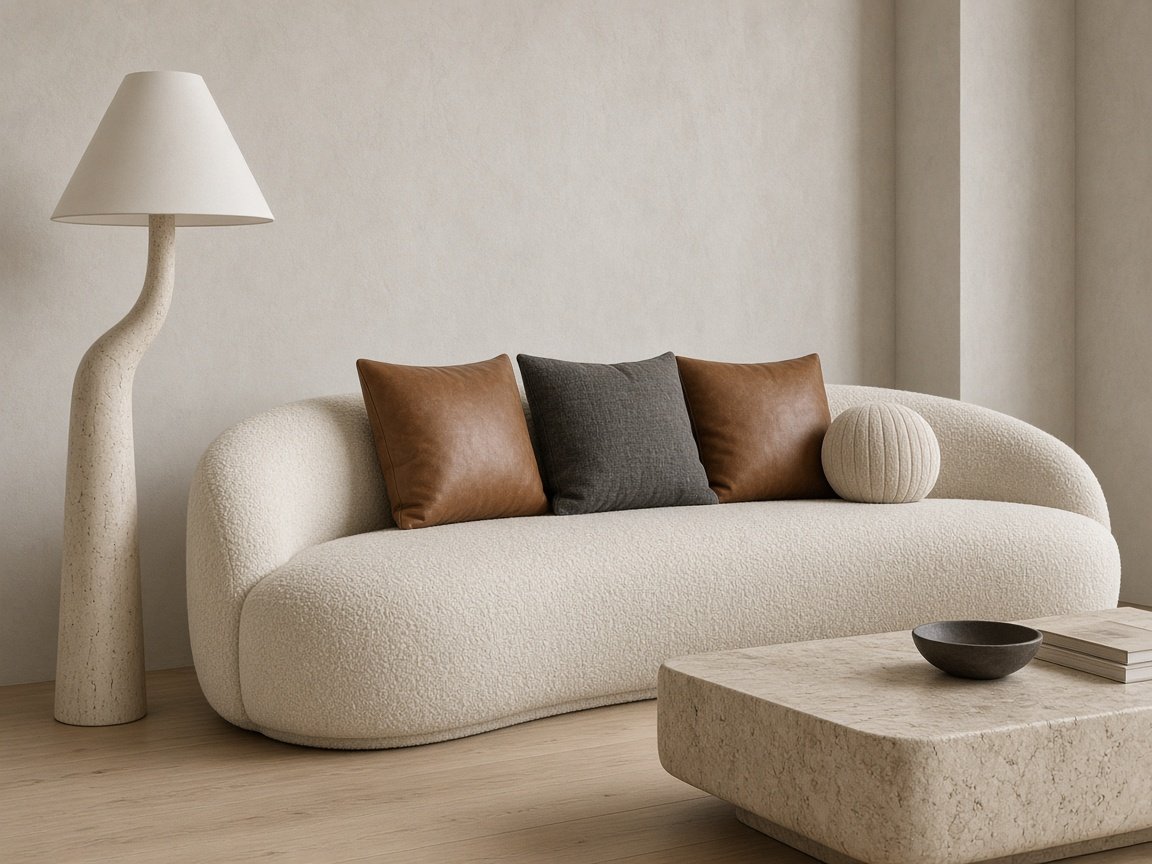
Skip: boucle pillows on a boucle sofa. All that texture blurs together.
Should pillows match the sofa color?
Usually no. A pillow that matches the sofa exactly tends to disappear. I’d rather go one or two shades darker or lighter, or pull a color from somewhere else in the room. If you love a tonal look, make the difference about texture: an ivory boucle pillow on an ivory linen sofa reads as intentional.
How do I make pillows look “styled” and not messy?
- Back to front, big to small. Largest pillows against the arms, smaller ones in front.
- The chop is optional. A karate chop on top of a feather pillow looks relaxed. On a modern sofa, a gentle fluff is enough.
- Leave room to sit. If you have to move pillows to sit down, there are too many.
- Refresh with covers, not pillows. Keep good inserts and swap covers by season. It’s cheaper and takes up less closet space.
My quick cheat sheet
- Track arm: knife-edge solids and small stripes, one textured lumbar.
- Rolled arm: florals, flanges, a round or bolster.
- Sectional: cluster in the corner and at the ends, 24-inch pillows in the corner.
- Leather: knits, wool, woven patterns.
- Boucle: smooth leather, linen or velvet.
If you’re working on a living room layout or picking a rug size, the same idea applies: choose one confident piece and let everything around it support it. Pillows are just the easiest place to practice.