Living Room Lighting Ideas: How to Layer Light (Without an Electrician)
How much light a living room needs, which bulbs to buy, and where to put lamps so the room looks good at night. Renter-friendly, with real numbers.
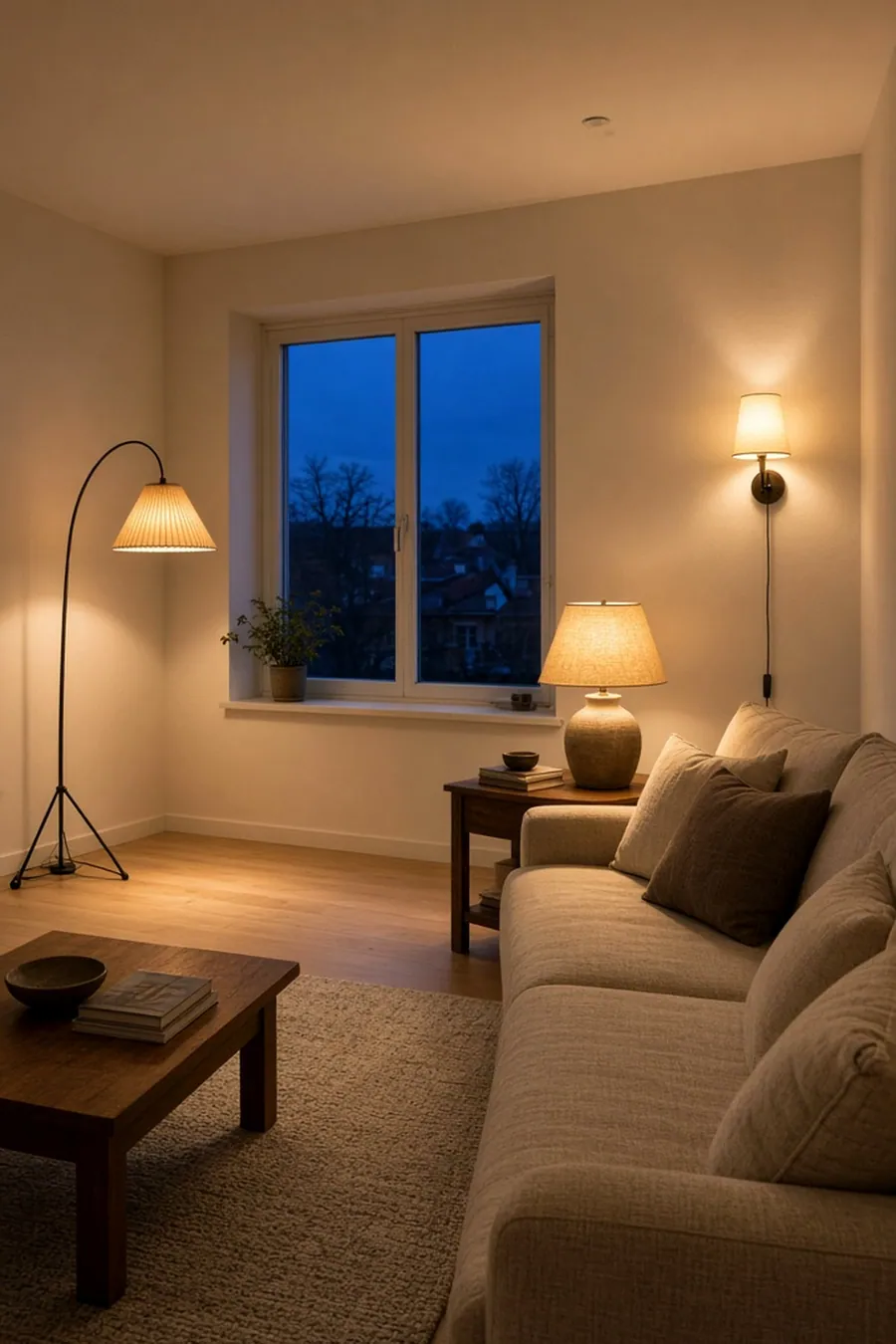
Turn off the ceiling light and add three lamps. That single change does more for a living room at night than any piece of furniture you could buy.
Overhead fixtures light a room from one point straight down. Faces get shadows under the eyes, corners go dark, and everything looks flat. Good living room lighting comes from several sources at different heights, which designers call layered lighting. You don’t need an electrician to do it. Almost everything below plugs into a wall.
How much light does a living room need?
A common guideline is 10 to 20 lumens per square foot for living rooms (foot-candles, in lighting terms). Multiply your room’s square footage by that range:
- 10 x 12 ft room (120 sq ft): about 1,200 to 2,400 lumens total
- 12 x 15 ft room (180 sq ft): about 1,800 to 3,600 lumens total
Go toward the higher end if your walls are dark, your ceilings are high, or you read a lot in the room. Lumens are printed on every bulb box. For reference, a standard “60-watt equivalent” LED is about 800 lumens and a “100-watt equivalent” is about 1,600.
That total should be spread across several fixtures, not packed into one. Four lamps with 450 to 800 lumens each will feel far better than a single 3,000-lumen ceiling fixture.
The three layers
Ambient light is the general glow that lets you walk through the room. In most rentals that’s the ceiling fixture, but floor lamps that bounce light off the ceiling (torchiere-style or uplights) do the same job more softly.
Task light is for doing something: reading, knitting, homework. A floor lamp beside a chair or a table lamp at the end of the sofa.
Accent light adds depth: a small lamp on a bookshelf, a picture light over art, LED strip lighting behind a TV or under a shelf. It’s the layer people skip, and it’s the one that makes a room look designed.
Aim for at least one source of each, and at least three light sources in total in any living room.
Pick the right bulbs
This is where most rooms go wrong, and it’s the cheapest fix.
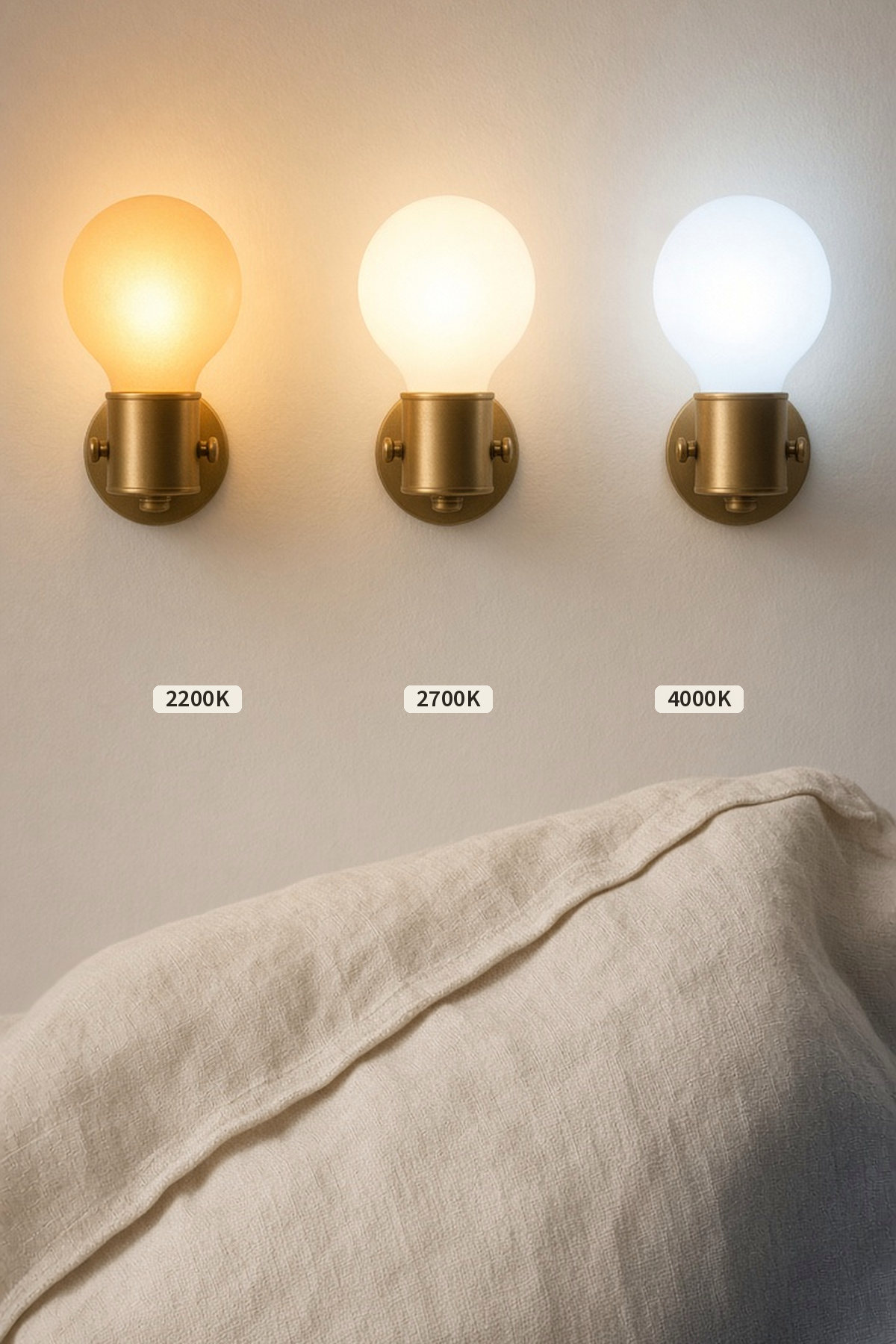
Color temperature. Measured in Kelvin (K). For living rooms, 2700K is the standard warm white and works almost everywhere. 3000K is a little crisper, fine if your room gets lots of cool north light or you prefer a cleaner look. 2200K to 2400K is very amber and lovely in an accent lamp or a paper shade. Avoid 4000K and above (often labeled “cool white” or “daylight”) in living spaces; they look clinical at night.
The bigger rule: keep the color temperature the same in one room. A 2700K lamp next to a 5000K ceiling light makes both look wrong.
CRI (color rendering index). This measures how accurately a bulb shows colors, on a scale up to 100. Look for CRI 90 or higher. Cheap bulbs around CRI 80 make skin look sallow and wood look grey. The difference in price is often only a couple of dollars per bulb.
Dimmable. If a lamp will ever be on a dimmer, buy bulbs labeled dimmable. Non-dimmable LEDs can flicker or buzz.
Where to put the lamps
Table lamps. For a lamp beside the sofa, the bottom of the shade should land roughly at eye level when you’re seated, which for most sofas means a lamp-plus-table height of about 55 to 65 inches from the floor. Too tall and the bare bulb glares at you. Too short and the light pools on the table instead of reaching your book.
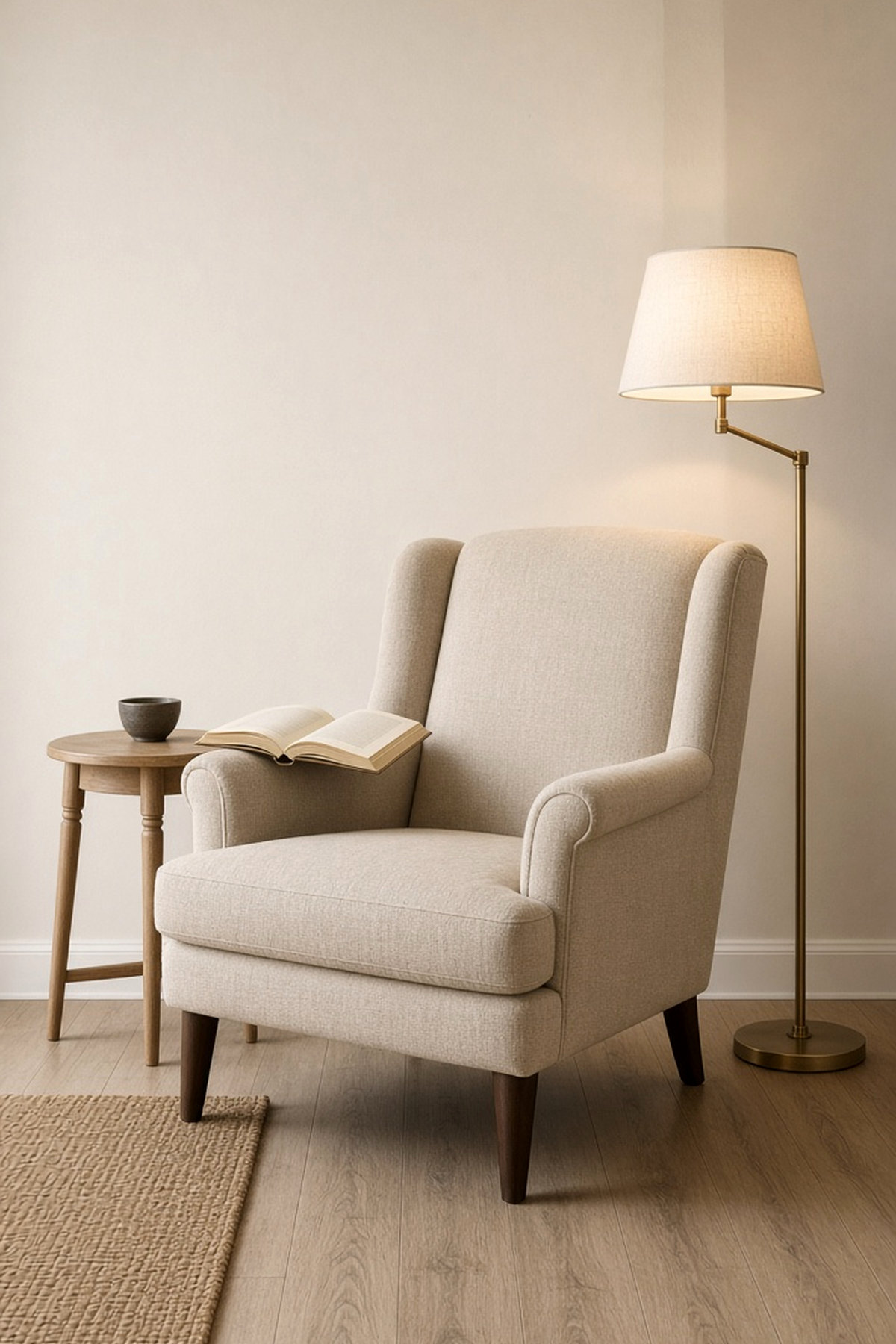
Floor lamps for reading. Place the lamp slightly behind and to the side of the chair, on the side opposite your writing hand if you like to take notes, so your hand doesn’t cast a shadow. The shade should sit around shoulder height when you’re seated.
Corners. Dark corners shrink a room. A floor lamp or a simple uplight tucked behind a plant in the darkest corner makes the room read larger after sunset.
Spread them out. Imagine a triangle between your light sources. If all your lamps cluster on one side of the room, the other half falls into shadow.
Plug-in ideas for renters
You can’t always hardwire, and you shouldn’t without your landlord’s permission. These all plug in:
- Plug-in wall sconces. They come with a cord and a plug, and you mount them with a couple of screws (small holes are usually patchable when you move out). A paintable cord cover running down to the outlet makes them look built-in. Expect $40 to $150 each for decent ones.
- Rechargeable cordless lamps. Useful on a console or dining table far from an outlet. Check the battery life; many last several evenings on a charge.
- LED strip lighting. Behind the TV, under floating shelves, or along the top of a bookcase. Choose warm white (2700K) rather than color-changing strips if you want it to look grown-up.
- Smart plugs or smart bulbs. They let you turn several lamps on with one tap or a schedule, which solves the main annoyance of lamp-based lighting: walking around the room flipping switches.
- Plug-in dimmers. A $10 to $20 inline or plug-in dimmer turns any lamp into a mood light.
Lamp shades matter more than lamp bases
A shade controls where the light goes. Linen or fabric shades in white or off-white diffuse light softly. Opaque or dark shades push light down and up only, which is good for drama and bad for reading. Paper shades glow evenly and suit Japandi and warm minimal rooms (see our Japandi style guide).
Swapping a dated or yellowed shade is an easy budget upgrade; new drum or empire shades start around $20.
What to do with the overhead fixture
If you rent and the ceiling light is unattractive, you have options:
- Swap the bulb for a warm, dimmable one and simply use it less.
- Ask your landlord if you can replace the fixture with your own, then switch it back when you leave. Keep the original and the screws in a labeled bag.
- In some fixtures a large paper or fabric shade can go over the existing bulb holder. Make sure the bulb is LED and keep the shade clear of the bulb.
Common lighting mistakes
- Relying on one overhead light.
- Mixing warm and cool bulbs in the same room.
- Choosing lamps that are too small for the furniture. A table lamp beside a full-size sofa usually needs to be at least 24 to 30 inches tall.
- Bare bulbs at eye level, which cause glare.
- Forgetting the corners.
Lighting is also the easiest way to make a home feel warmer in winter; our cozy winter decor ideas build on everything above. And if your living room still feels unfinished once the lamps are in, check the rug size with our rug guide, then look at these ways to make your home look more expensive.